

The lint that comes out of a neglected dryer duct doesn’t look like lint. It comes out as a gray felt slab that holds its shape on the driveway, and the homeowner watching almost always says the same thing: I had no idea.
That reaction is the whole problem. Ask a homeowner what a roof costs and you’ll get a number. Ask about dryer vent cleaning and you get a shrug, so the job slides year after year until something finally forces the issue.
My position: this is the highest-return hundred dollars in home maintenance, and most people get it wrong twice over. They skip it, or they buy the $79 coupon special and call it covered.
Here’s what dryer vent cleaning Tampa homeowners should pay, what separates a real cleaning from a fake one, and the code detail behind why some houses clog twice as fast as their neighbors.
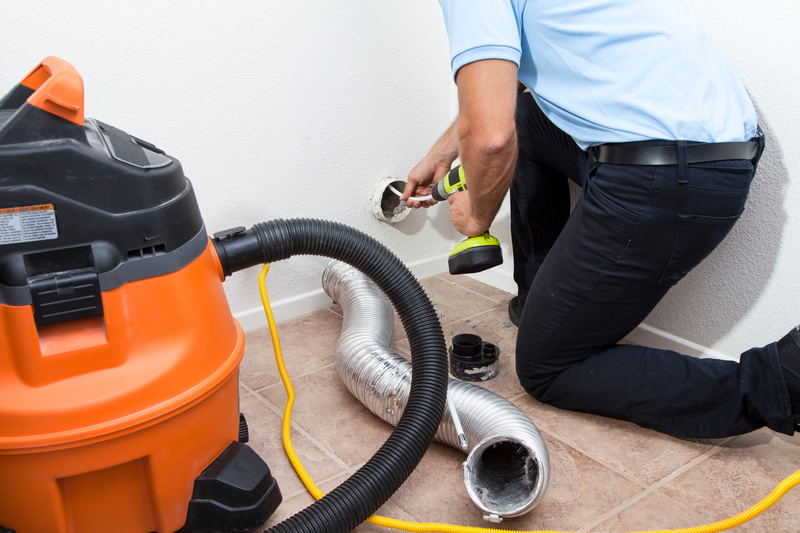
What It Costs in Tampa: $100 to $200:
Angi’s 2026 data puts the national average at $145, spread $75 to $340. Home Guide splits it by exit type: $80 to $185 for a wall vent, $150 to $250 for a roof vent.
Tampa lands mid-pack, without the labor premium San Francisco and Boston carry, so most dryer vent cleaning Tampa Fl quotes fall between $100 and $200. Roof runs push toward $250.
Under $80 buys a shop vac and no ladder. The exterior hood, where lint compacts hardest, never gets touched.
What Moves the Price:
- Where it exits. Roof terminations mean ladder work and often a second tech.
- Length and bends. Ten to twenty feet with a couple of turns is baseline. Past that, rod extensions and time.
- How bad it’s gotten. A vent cleaned last year takes half an hour. A neglected one, twice that.
- What’s living in there. Bird nests turn up constantly on dryer vent cleaning Florida calls, since nesting season never closes here. Add $120 to $250.
Failure to Clean Is Behind a Third of Dryer Fires
NFPA’s analysis of 2010–2014 data found an average of 15,970 home fires a year involving clothes dryers and washing machines; dryers accounted for 92%. Failure to clean led every other contributing factor at 33%, and those fires were associated with half of all dryer fire deaths.
Lint is fine, highly combustible fiber. As it coats the duct, airflow drops, the dryer runs hotter and eventually fuel and ignition share six inches of pipe.
Ask anyone in fire restoration about laundry room fires and you’ll hear the same thing: nobody saw it coming. Dryer Vent Fire Prevention isn’t sophisticated work. It just never makes the calendar.
35 Feet: The Limit Your Duct May Already Exceed
The International Residential Code, which Florida’s code is built on, caps a dryer duct at 35 feet of developed length — measured through every bend, not straight-line. Each 90-degree elbow subtracts 5 feet, each 45 subtracts 2.5. Manufacturers often cut it to 25, and the stricter number wins.
Do that math on your house. Two 90s leave 25 usable feet. Interior laundry rooms blow past it routinely, and nobody mentions it at closing. That’s why your neighbor’s vent stays clear for years while yours clogs in months.
Signs Your Vent Is Already Clogged
- Clothes need a second cycle, or come out damp after a full timed run
- The dryer cabinet or laundry room feels hot afterward
- A scorched or burning smell during operation
- The exterior flap barely lifts while the dryer runs
One that surprises people: if somebody screened your vent cap to keep birds out, take it off. The residential code has barred screens at dryer terminations for years (IRC M1502.3), because lint blinds them in weeks. The guard becomes the blockage.
Once a Year, Twice for Some Houses
NFPA’s dryer safety guidance says annually, or sooner if drying times creep up. Go twice if you run eight-plus loads a week, own a shedding dog, or have a long roof-exit run.
Where DIY Stops Being Enough
A $15 to $50 kit clears the first few feet of a short straight run — worth doing between visits, but it’s a different job.
A Tampa dryer vent cleaning service drives a rotary brush on segmented rods from one end while a commercial vacuum pulls at the other, so lint comes out instead of packing deeper. On a bend-heavy condo run, a brush head can unthread inside the duct or punch through old ducting. Either repair costs more than ten cleanings. It often rides along with other residential cleaning services since the truck’s already there.
FAQs:
Q1. How do I vet a company?
Ask if the technician holds a C-DET credential from the Chimney Safety Institute of America, which CSIA calls the only nationally recognized credential for the work.
Q2. How much does dryer vent cleaning cost in Tampa?
The cost of dryer vent cleaning in Tampa depends on the vent’s length, location, accessibility, and the amount of lint buildup. A professional inspection can provide an accurate estimate based on your home’s specific vent system.
Q3. Can a clogged dryer vent cause a house fire?
Yes. Lint is highly flammable, and excessive buildup can restrict airflow and cause the dryer to overheat. Regular dryer vent cleaning helps reduce fire risks, improve drying efficiency, and protect your home and family.
Final Thoughts:
Call it $150 and one hour, once a year, against NFPA’s finding that failure to clean is behind a third of home dryer fires. The decision stops being interesting.
Before you close this tab, start a load and look at the vent flap. If it isn’t standing wide open with warm air pushing through, your duct is telling you something. Dryer Vent Fire Prevention is mostly listening to it.