
Most Tampa homeowners think about their HVAC system twice a year: when the first real heat of May arrives, and again in October when the electric bill finally drops. The ductwork running through the attic and walls barely registers — until it starts to smell.
Air duct cleaning Tampa,Fl calls spike in the weeks after a named storm or a stretch of particularly heavy rain. That’s not a coincidence. Gulf Coast humidity is the baseline problem for any duct system here; a storm event is what tips a manageable situation into a contaminated one. A filter change doesn’t fix either. What builds up inside Tampa’s ducts — and how quickly — is worth understanding before you notice the smell rather than after.
Why Tampa’s Humidity Turns Your Ducts Into a Mold Reservoir:
Florida averages around 74 percent relative humidity annually. In summer it runs higher than that. In winter it never drops low enough to give your duct system a break. When the AC runs, it pulls warm humid air across the evaporator coil, cools it, and pushes the conditioned air back through the duct network. That process removes moisture — but not all of it reaches the condensate drain. Some settles on duct surfaces, especially where insulation is thin, where ducts run through the hot attic, or where joints aren’t properly sealed.
This is the detail that separates a Tampa duct system from one in Phoenix or Denver: in a dry climate, dust in ducts stays dry. In Tampa, that same dust absorbs ambient moisture, clumps together, and sits damp against duct walls in the temperature range where mold establishes. Every time the AC cycles on, that air moves through the system and into the rooms where you live.
The evaporator coil and drain pan are where this shows up first. A clogged or slow-draining pan lets standing water sit at the base of the air handler — right at the point where return air enters the system. That moisture travels with the airstream directly into the supply ducts. The EPA cites the condensate pan as a primary maintenance point for indoor air quality Tampa homeowners and humid-climate homes generally, but a clean pan doesn’t tell you what’s been accumulating inside the duct runs.
Post-Storm Moisture: When the Duct System Becomes the Problem:
A storm doesn’t have to flood your living room to reach your ducts. A cracked ridge vent, a small roof breach, or wind-driven rain that finds a soffit gap can deposit moisture directly into the attic where most of Tampa’s ductwork runs. Flex duct settles at low points in the run. Moisture collects there and stays, hidden above the insulation line, where you’d never think to look.
After Hurricanes Helene and Milton hit Tampa Bay in 2024, HVAC contractors across the region reported something consistent: service calls driven not by visible storm damage but by smell. Homeowners whose houses hadn’t taken on water — no flooded floors, no wet drywall, nothing they could see — were running their AC two or three weeks after the storm and noticing a smell every time the system cycled on. Some described it as musty. Others said it smelled like wet cardboard. In most of those cases, the source was duct moisture that had entered the attic during the storm and found a low spot in the flex runs or the return air plenum. It wasn’t dramatic. It was just sitting there, unseen, doing what moisture in warm air does.
The timing is the problem. Mold begins establishing on wet surfaces within 24 to 48 hours in Florida’s temperature conditions. A duct system with moisture in it on a Thursday can have active growth by Saturday, and no air filter is going to reverse that. The system needs to be inspected and dried — not just run, which moves warm humid air through the problem rather than solving it.
Warning Signs That Deserve a Call:
- A musty or stale odor when the AC first kicks on — especially if it’s new or getting worse
- Visible dust or dark discoloration at vent covers that returns quickly after cleaning
- Allergy or respiratory symptoms that are noticeably worse at home than anywhere else
- Uneven airflow — some rooms not cooling the way they used to
- Higher electric bills without an obvious explanation
Air Duct Cleaning Tampa: How Often Should You Actually Clean Your Ducts?
The national guideline from NADCA — the industry’s trade association for HVAC inspection and cleaning — is every three to five years for most residential systems. That’s reasonable for a home in a moderate climate. Tampa is not a moderate climate, and the number that actually applies here is different.
The question of how often should you clean air ducts in Florida gets answered differently by most Gulf Coast HVAC professionals: every two to three years for a standard Tampa home. The reasoning is simple. Your AC runs nine to ten months a year.
A home in Minnesota might run its system for five or six months. That gap in runtime translates directly into how much total air — and how many airborne particles, how much humidity, how many opportunities for moisture to reach duct surfaces — passes through your system in a given year. You’re not at three times the risk of a northern homeowner, but you’re not at the same risk either.
Shorten that interval if any of these apply:
- You’ve had a storm that caused any attic moisture intrusion, even minor — this is the highest priority trigger
- A musty smell when the AC starts, even faint or intermittent
- Pets, heavy household dust, or renovation work in the last two years
- Visible discoloration at any register or near the air handler
- The system has never been inspected — not cleaned, just inspected — by a professional
What a Real Cleaning Includes — and Why the $79 Special Doesn’t Work:
The benefits of air duct cleaning are real — better airflow, reduced allergen load, elimination of odor sources — but only when the cleaning is done to a real standard. The NADCA ACR Standard, updated in 2025, defines that standard: not just supply and return ducts, but the full air distribution system, including the air handler, coils, drain pans, and plenums.
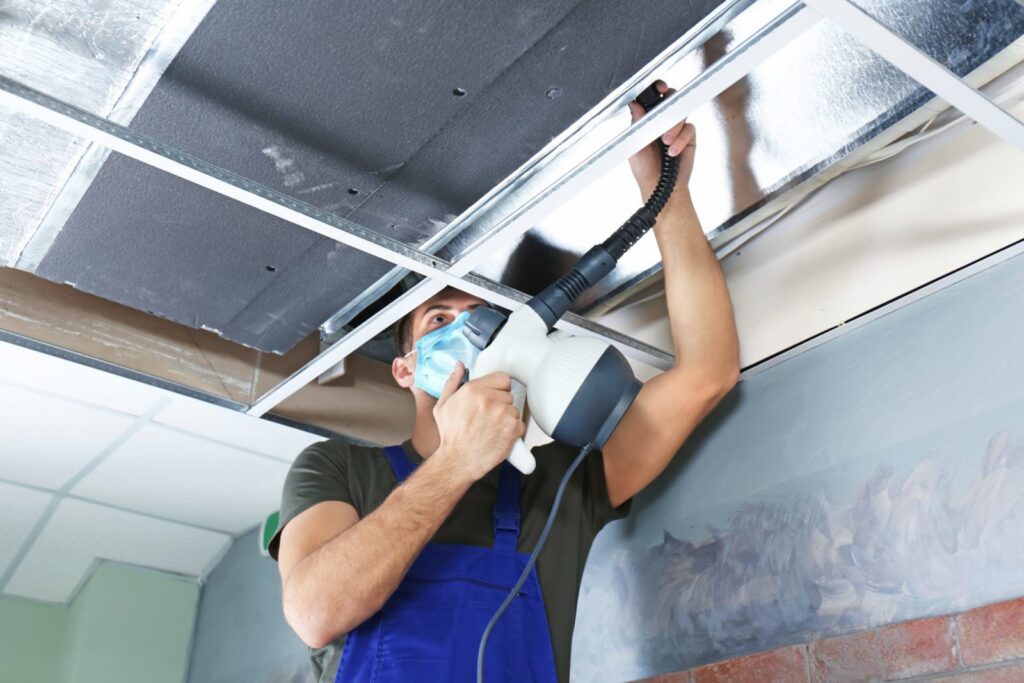
The key requirement is what NADCA calls source removal. Contaminants have to be physically dislodged from duct surfaces using mechanical agitation — rotary brushes, air whips, or contact tools — and simultaneously extracted under continuous negative pressure so that nothing goes airborne into the living space. This matters because duct contamination doesn’t float free on its own. Mold, settled dust, and damp debris are stuck to surfaces. Suction alone, without physical agitation to break the bond first, pulls out what’s loose and leaves everything that’s actually attached.
A duct cleaning service in Tampa that quotes $79 for a whole house is using one or two vacuum access points and skipping the agitation step entirely. After that job, the vents look cleaner. The visible register covers may be genuinely cleaner. But the interior duct wall surfaces — where the settled, clumped, moisture-affected debris actually lives — haven’t been touched. The air coming out of your vents is passing over the same contaminated surface it was before.
For reference: a properly scoped residential duct cleaning in Tampa — one that covers the full system, not just the registers — typically runs $300 to $700 depending on system size and condition, according to multiple 2026 Tampa-area HVAC providers and Angi cost data. A quote significantly below that range is almost always a sign that corners are being cut, specifically on equipment capacity and agitation.
Before scheduling, ask:
- Do they use truck-mounted or high-capacity portable negative pressure equipment?
- Do they mechanically agitate duct surfaces, not just vacuum from access points?
- Does the scope include the air handler, coil, and drain pan — not just the ducts?
- Will they show you before-and-after photos or video of duct interiors?
For Florida HVAC duct cleaning services, those four questions separate the actual work from the $79 illusion of it.
After a Storm: What to Do Before You Run the AC for Days Straight:
Duct cleaning in Florida matters most when it intersects with storm events — specifically when moisture has entered the attic before you even know there’s an issue. If a storm caused any roof breach, soffit gap, or attic flooding, the right sequence is inspection first, then extended AC runtime, not the other way around.
Running the AC for days after a moisture event doesn’t dry out the ducts. Warm humid air cycling through a system with standing moisture in the flex runs drives contamination faster. The inspection — which doesn’t have to be a full cleaning — tells you whether moisture reached the system and whether the first step is dehumidification and drying or direct cleaning. That determination takes a few hours. Waiting until you smell something costs significantly more to fix.
For Tampa homeowners, scheduling an inspection after any storm is the difference between a cleaning and a remediation. The restoration and cleaning services page covers the full post-storm response — water extraction, structural drying, content recovery — and duct assessment belongs in that same conversation.
Frequently Asked Questions:
Q1. Does Tampa’s humidity really make duct cleaning more urgent than other states?
Yes, and the reason is runtime, not just humidity. Your AC runs nine to ten months a year in Tampa — roughly twice the annual hours of a system in a four-season climate. More hours means more air volume moved through the system, faster particle accumulation, and more thermal cycling across duct surfaces in conditions where ambient moisture is available. Most Gulf Coast professionals put the realistic cleaning interval at two to three years, not the national guideline of three to five.
Q2. What should I consider when choosing a professional for air duct encapsulation?
When choosing a professional for air duct encapsulation, look for a company with proven experience in HVAC and duct restoration. Verify that they are licensed, insured, and certified by recognized industry organizations.
Ask about the encapsulation products they use and ensure they are safe, durable, and approved for HVAC systems. Check customer reviews, request references, and confirm they provide a detailed inspection before starting work.
A reputable contractor should also offer a written estimate, explain the process clearly, and stand behind their work with a warranty.
Q3. What are the best materials for radiator air ducts?
The best material for radiator air ducts depends on the application, but galvanized steel is the most common choice due to its strength, durability, and resistance to corrosion. Aluminum ducts are lightweight, rust-resistant, and suitable for areas where reduced weight is important. Stainless steel is ideal for high-moisture or harsh environments because of its superior corrosion resistance.
For insulation and energy efficiency, ducts can be wrapped with fiberglass or other approved insulation materials. Choose materials that can withstand heat, maintain proper airflow, and comply with local building and HVAC codes. Proper installation is just as important as the material to ensure long-lasting performance and efficiency.
Q4. Should I clean the ducts or the coil and drain pan first?
If you can only do one thing, start with the coil and drain pan. They’re the primary moisture source in the system, and contamination there re-contaminates clean ductwork almost immediately. A complete air duct cleaning Tampa job treats the air handler, coil, drain pan, and duct runs as one system — which is the right approach when you can do it all at once.
Final Thoughts:
Ducts are easy to ignore because they’re invisible. In a place where the humidity never really lets up, the hurricane season is six months long, and the AC runs almost every day of the year, invisible doesn’t mean clean. The conditions inside a Tampa duct cleaning system are simply not the same as those in most of the country.
The pattern that leads to expensive remediation is consistent: nothing visible, no smell yet, system running fine — then a storm, then weeks of the AC running through a moisture problem that nobody inspected, then a smell that turns out to be a significant contamination event rather than something a cleaning alone can solve. Inspection after any storm, and on a two-to-three-year schedule otherwise, is what keeps that pattern from playing out.